
Kalkaska County VINELink Coverage
MI-VINE is Michigan’s free, confidential custody and court information service. It can provide status information and alert registrants to events such as release, transfer, or escape. The Kalkaska County Sheriff’s inmate page directly sends users to VINE and says jail staff will make every effort to notify victims of release. That official local direction matters because the Sheriff does not publish a current roster or a rolling list of released people.
VINELink is built for checking one known person and watching a pending custody event. It is not a permanent release archive. A live result reflects what a participating agency reported, and the exact displayed status should be preserved. The service can cover county-jail information and Michigan court events. A state-prison transition may require MDOC’s separate statutory victim-notification process. Federal Bureau of Prisons and immigration custody use different systems.
Search a Kalkaska Inmate on VINELink
Begin at VINELink, select Michigan, and choose the offender search. Use a full name or available identification number. A same-name match is not enough. Compare every identifier and the reporting agency before opening or relying on the record. Kalkaska custody can also involve Wexford County Jail, so the agency name can help show which jail supplied the event.
- Open VINELink and choose Michigan as the state.
- Select the offender search rather than assuming a court-event search holds custody data.
- Enter the person’s legal name or available ID, then review possible matches.
- Compare identity details, custody agency, and location. Do not merge two people with similar names.
- Open the matched record and read the status and location exactly as displayed.
- If the person is still in custody, use the registration option for future alerts.
The screenshot below comes from the official VINELink interface captured for the Michigan selection and specific-person search path.
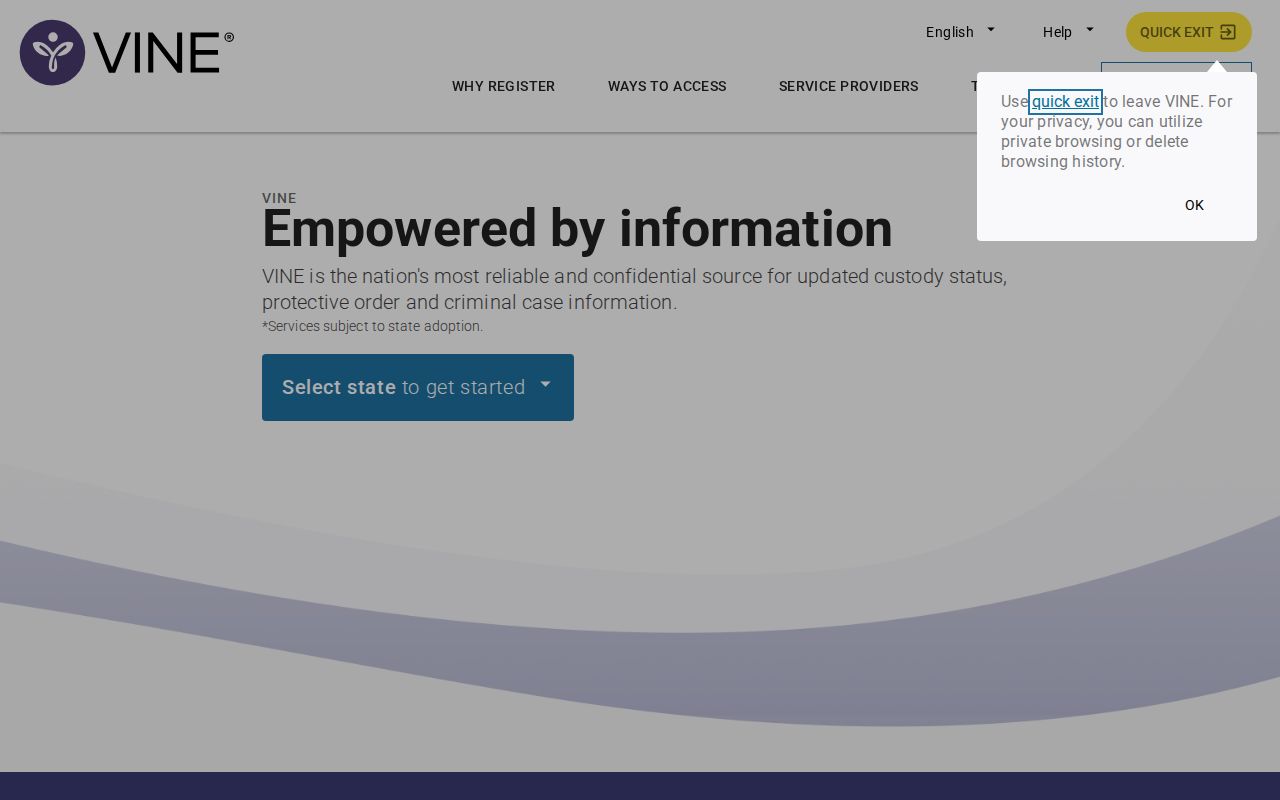
The state choice and identity match come before registration. That order helps prevent an alert from being attached to the wrong record.
Note: The live system did not provide a stable Kalkaska released-result URL, so field labels must be read from the current record.
Kalkaska VINELink Release Fields
A VINELink result can show enough information to identify the person and understand the reported custody state. Field availability can differ by agency. Do not add a release reason, destination, or time that the live record does not display. When the result says released or out of custody, capture the status, agency, and date exactly, then contact that agency for the detailed jail record.
| Field | How to read it |
|---|---|
| Name or offender ID | Identity information used to separate the correct person from similar matches |
| Custody status | The participating agency’s current reported state, such as in custody or released |
| Agency or facility | The custodian that supplied the event and should be contacted for confirmation |
| Location | The place shown by the live record, when available |
| Event date | The date attached to the reported custody change, not necessarily a complete release log |
| Registration option | The available route for phone, text, or email notice while the person is eligible |
A “released” result answers only what that participating agency reported. A person may have moved from Kalkaska County custody to Wexford, MDOC, ICE, or another agency. A transfer ends one custodian’s hold but is not a community release. For exact release type, time, and destination, ask the Sheriff for the release form or log.
Kalkaska VINELink Identity Checks
Identity matching is part of the release check, not a mere search convenience. Use the full legal name, known aliases, date of birth, booking number, court case number, or MDOC number when the relevant system provides them. VINELink’s live record may not show every identifier, so compare what is available with a court or custody source before relying on an alert. A person’s name alone can lead to the wrong agency record.
The reporting agency is especially useful in Kalkaska County. Official sources document Wexford County housing for Kalkaska prisoners, but they do not establish the present placement of every detainee. A Wexford record may reflect the place of physical custody, while Kalkaska holds the court case or original arrest record. Ask which office logged the departure and whether the event was a return, transfer, or community release.
Preserve the live status as text or a lawful personal record when an event matters. Note the agency, date, time, and exact wording. Then compare the event with the jail release form or transfer log. If the custody agency and the expected case do not align, stop and verify before registering. That check prevents a notification for another person from being treated as proof about the intended Kalkaska case.
Note: A booking photograph can aid identity matching, but only the exact booking source establishes which agency created the image.
Register for Kalkaska Release Alerts
Registration works best while the person remains in custody and the record offers notifications. MI-VINE can provide phone, text, or email choices. The available options should be taken from the live registration screen. The service is also available through the state line at 800-770-7657, with TTY access at 866-847-1298.
- Open the correctly matched in-custody record.
- Select registration or notification for the event types offered.
- Choose phone, text, or email and enter the requested contact information.
- For telephone alerts, create a four-digit PIN and keep it available.
- When an automated call arrives, enter the PIN followed by the pound sign to acknowledge it.
- Update account contact information if a phone number or email address changes.
The official MI-VINE brochure says the system may leave a message and retry until the call is acknowledged or for up to 24 hours. A missed call is therefore not a reason to infer that no event occurred.
Note: Keep the PIN private and current contact details on file so the service can complete its event notification cycle.
Kalkaska-to-MDOC Notification Changes
Kalkaska’s own inmate page confirms a local VINE route. Michigan court guidance adds a second layer. People watching a participating county-jail subject can self-register through VINELink, while statutory victims in MDOC prison matters use MDOC’s notification request process. A transfer from the Kalkaska County Correctional Facility into state prison can therefore change the correct registration channel.
The event wording controls the next step. “Transfer” should prompt a check of the receiving custodian. If MDOC receives the person, use OTIS for public custody and supervision status, then follow the MDOC notification process when it applies. Do not assume a county registration will automatically follow every state-prison transition.
Wexford housing adds another local wrinkle. Official Kalkaska materials document out-of-county housing, but they do not prove where each person is held now. Match the agency shown in VINELink and ask whether Wexford or Kalkaska entered the physical departure record.
Kalkaska Release vs Current Custody
A person still held by a participating jail may have an active VINELink record and a registration button. A person already released may appear with an out-of-custody status, but VINELink is not meant to serve as a long-term archive. Kalkaska County has no public current roster to compare against, so an absent VINELink result should not be treated as proof of release.
For a recent event, use the alert as a prompt. Call the Kalkaska jail line, inspect the related court order, and request the Sheriff’s release or transfer record when exact proof is needed. The Kalkaska County release-record paths distinguish a physical departure from the order that authorized it. For an older state matter, use OTIS and MDOC records. For a jail-only event, OTIS will not help.
A court record can explain bond, dismissal, sentence, or another legal act. It does not establish the minute a person walked out. Likewise, VINELink can report a custody event without supplying every field in the inmate jacket. Using both sources gives the legal cause and the reported custody change.
Kalkaska VINELink Limits and Verification
VINELink data can lag, and not every agency supplies the same fields. A person may also be outside its coverage. Federal custody must be checked with the Bureau of Prisons locator. Immigration custody uses the ICE Online Detainee Locator, which has exclusions and a limited post-release window. Michigan’s sex-offender registry covers only people subject to registration law and is not a general release database.
If the alert says release, ask whether it means community release or a handoff. If it says transfer, identify the receiving agency. A Kalkaska-to-MDOC transfer is not a released state prisoner. The county record shows the local transfer, while OTIS shows later state status. A federal RELEASED result only resolves BOP custody and does not answer another agency’s hold.
VINELink is strongest when used before an expected event and paired with an official record afterward. It gives timely notice. The Sheriff, court, or MDOC record supplies the durable proof.
For every Kalkaska event, record the reporting custodian first. That one detail determines which office can confirm the release or transfer.